Cultivating a Mission and Discipleship Ecosystem
“…the whole body, supported and held together… grows as God causes it to grow.” (Colossians 2:19)
If new creation is unfolding among us, our task is not to manufacture programmes, but to cultivate the conditions in which it can flourish. This calls for attention to relationships, rhythms and shared learning—recognising that mission and discipleship are not separate activities, but one living reality.
Too often, mission and discipleship are held apart: one outward-facing, the other inward-forming. Yet, they were never meant to be divided. Becoming like Jesus and participating in his mission belong together. As we follow Christ, we are drawn into both transformation and participation as one movement of grace.
Over time, this shared life takes on an organic shape—not a strategy to implement, but an ecosystem to nurture. Rather than relying on linear models or fixed pathways, we are learning to see the Church as a living, interconnected whole: a mixed ecology in which churches, networks and partnerships collaborate to cultivate faith, deepen community and contribute to the flourishing of their local contexts.
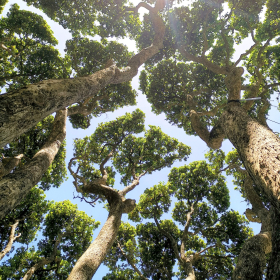
Like a forest made up of many forms of life, the Church is most fruitful when it embraces diverse expressions. In a healthy ecosystem, diversity strengthens resilience. Across our presbytery, larger congregations, smaller fellowships, fresh expressions and networks all have a part to play—distinct in form, yet connected and centred in Christ. Together, they enrich, challenge and sustain one another. Each contributes. Each receives. Each learns.
At the centre of this ecosystem is a person: Jesus Christ. We are shaped around him rather than defined by closed systems. This creates space for people to belong, explore and grow at different stages of faith. Discipleship becomes a journey towards Christ, and mission a natural outflow of that shared life in him.
This way of life is deeply relational and grounded in context. Mission begins with listening—to our neighbourhoods, to one another and to the Spirit. It responds to real needs and attends to the whole of life: spiritual, relational, social and practical. Faith is not compartmentalised; it is embodied and lived.
Shared rhythms sustain this life together: worship, prayer, learning, service, hospitality, care and the sharing of faith. Discipleship is formed not only through programmes, but through everyday life—learning, serving and growing together. Resources are shared. Leaders collaborate. Communities discern and respond together to what God is doing.
The aim is not doing but being new creation—formed through transformation and participation in the renewal of people, communities and the wider world in the light of the Kingdom of God.
An ecosystem is not engineered; it is cultivated. It requires patience, trust and generosity. This ecosystem of mission and discipleship grows as God gives the growth.
New Creation invites us to tend what God is already growing among us.
Isaac Um
Mission, Pioneering and Planting Co-Ordinator
Presbytery of Glasgow

